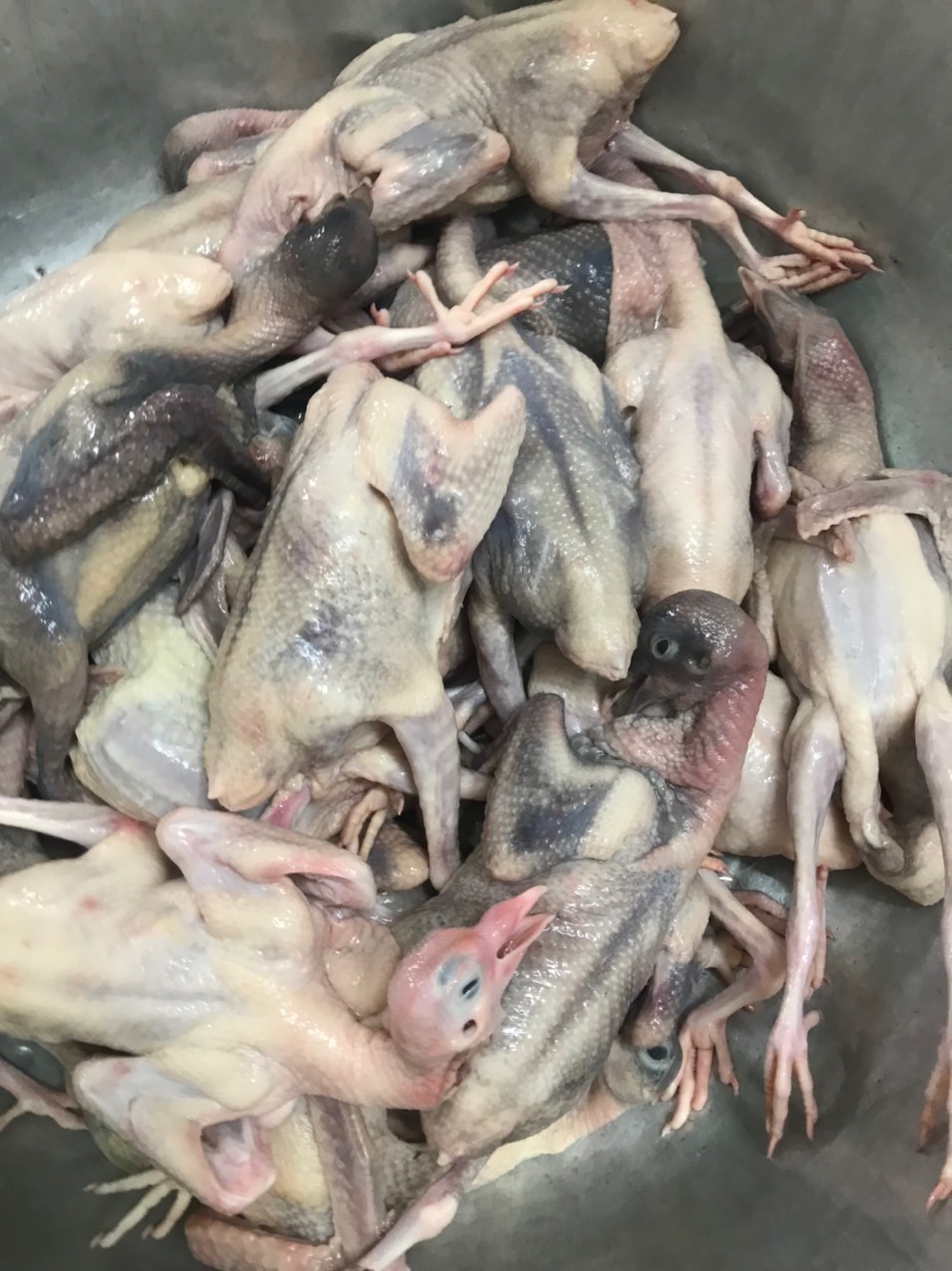
Every morning when receiving fresh meat from trusted suppliers in Da Nang, the cook's first task is to check each bird with their fingertips. A good cut of meat must have a natural bounce, dry skin, and no off odors.
At Gà Ác Ngũ Trảo, simmered dishes always demand care starting with the raw ingredients. For dishes like simmered pigeon or pigeon congee, choosing the right young bird decides almost all of the meat's tenderness and the broth's natural sweetness.
If you want to cook a good pot of soup at home, these practical tips will help you pick fresh, tender pigeon right at the market.
How to identify squab by the beak, wings, and breast
Squabs (bồ câu ra ràng) are young birds around ten to fifteen days old. At this stage, they only have down feathers, cannot fly yet, and feed entirely on crop milk from their parents, keeping the meat moist and the bones soft.

When buying, you can check three direct points:
- The beak: Squeeze the edge of the beak gently between two fingers. A young squab's beak is soft and pliable. If the beak feels rigid and does not yield to pressure, the bird has begun to mature.
- The skin under the wings: Gently lift the wing to look underneath. A young bird has thin, soft skin there, with plenty of fine down feathers still clinging on. If the wings are fully covered in stiff quill feathers, the bird left the nest some time ago.
- The breast: Press your thumb against the bird's breast. A squab breast is plump and meaty, yet you can clearly feel the tenderness of the young muscle when you press down.
Checking these three details lets you spot a young bird immediately without relying on the seller's pitch.
Signs of fresh pigeon meat at the market
In Da Nang's wet markets, pigeon is usually prepped and laid out on stalls alongside other poultry. To find fresh pigeon, pay close attention to skin color and how the flesh responds to touch.
A freshly butchered pigeon has naturally pinkish skin, neither bleached white nor turned dull gray. Look closely at the breast and thighs, avoiding birds with bruises, dark blood pooling under the skin, or discolored cuts. Bruising indicates the bird suffocated or suffered impacts before processing.
Next, press firmly with your fingertip into the thickest meat on the thigh or breast and release. Fresh meat springs right back, leaving no dent behind. If the flesh feels mushy or sticky against your skin, the bird has sat out for hours.
Smell is just as important. Fresh pigeon carries only the faint, clean scent of freshly dressed poultry. If you detect a sharp fishy odor, sourness, or the smell of chemical cleaners, leave it alone.
Telling young and mature pigeon apart for soups and congee
Shoppers often confuse squab with small, mature pigeons. Telling them apart matters because each age requires a completely different cooking method.
Mature pigeons have hard bones, rough feet, and tough beaks. Their meat is muscular and stringy, protected by thicker skin. If you use an older bird for bồ câu hầm thuốc bắc (Herbal Pigeon Soup) or congee, the meat dries out and turns stringy after a long simmer, and the broth clouds over from excess melted fat.
By contrast, squab has soft rib and wing bones—tender enough that you can chew through the bone tips once cooked soft. The young marrow yields slowly over low heat, giving pigeon congee a clean, natural sweetness without extra seasoning powders.
The broth in a slow simmer does not rely on heavy seasoning; it comes from the freshness and age of the bird gently cooking over low heat.
In slow-simmered dishes, young pigeon meat stays tender and pulls apart easily, without drying out beside botanicals like kỷ tử (goji berries) or hạt sen (lotus seeds).
Prepping to clear odors without losing natural sweetness
Pigeon meat has a distinct scent stronger than chicken, so cleaning must be done right to keep the aroma clean without washing away the natural juices of the meat.
First, never soak the bird in water for too long, as water leaches out the natural juices from the muscle. Rinse it quickly under cold running water instead. Slip your fingers into the cavity to clear out the lungs, the dark membrane along the ribs, and blood clots along the spine. These are the main culprits behind off odors during cooking.
Once the cavity is clean, crush a small piece of fresh ginger and mix it with two tablespoons of rice wine. Rub this mixture gently over the skin and inside the cavity for one to two minutes. The wine and ginger oils neutralize strong odors quickly.
Rinse the bird with clean water and let it drain completely in a colander. For an especially clear broth, bring a small pot of water to a boil with a slice of ginger, drop the bird in for thirty seconds, and lift it out immediately. This tightens the skin while locking all the juices inside.
Once the pigeon is prepped and clean, place it in the pot with a few slices of ginger, táo đỏ (red dates), or hạt sen (lotus seeds), keep the lid on tight, and begin simmering over a low, steady heat.